
Korea's Forgotten Board Games
The games that entertained scholars, families, and kings long before arcades, consoles, or mobile apps.

When people think of Korean culture today, they often think of K-dramas, K-pop, skincare, and food. But centuries before any of those existed, Korea had its own rich world of games.
Some were played during Lunar New Year celebrations. Some were carved into palace grounds and village courtyards. Others were designed to teach strategy, simulate government careers, or simply bring families together on cold winter evenings.
Let’s step into Korea’s forgotten gaming history.
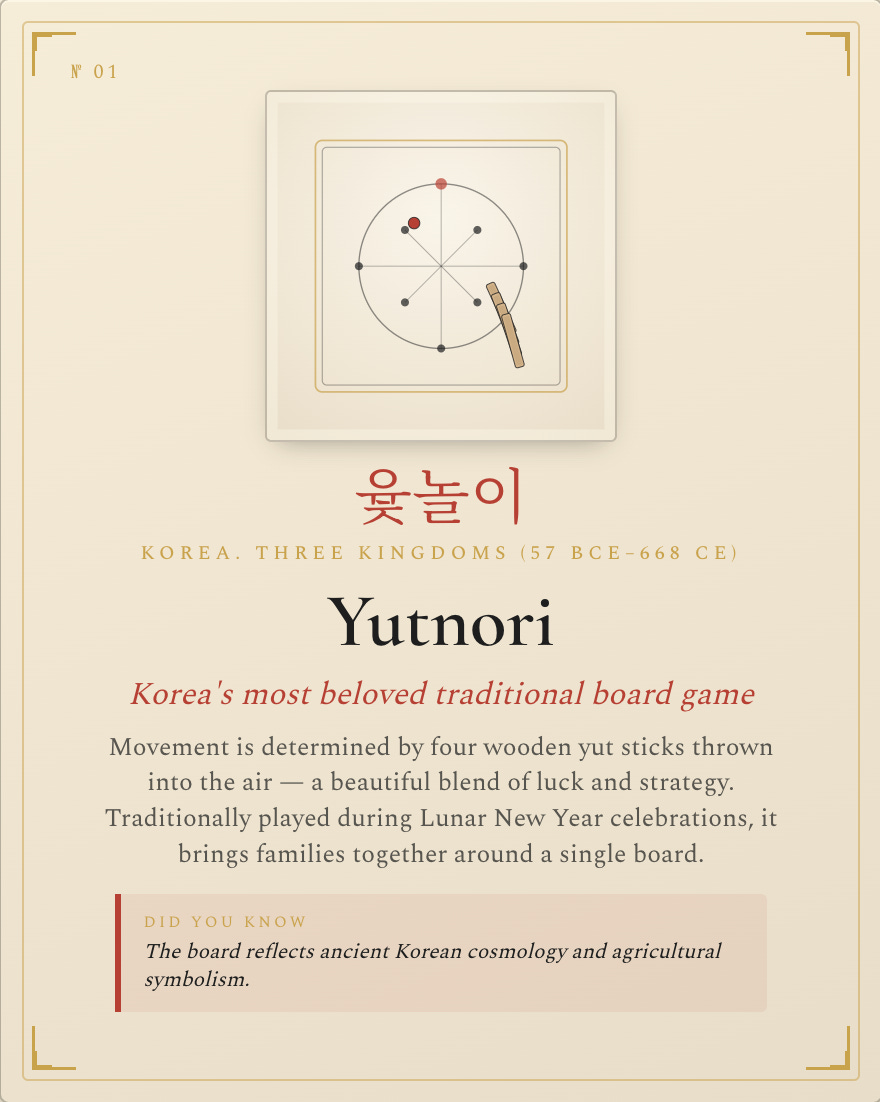
🎲 Yutnori: Korea's National Board Game
If India had Pachisi, Korea had Yutnori.
For centuries, families have gathered during Lunar New Year to play this simple yet surprisingly strategic game. Instead of rolling dice, players throw four wooden sticks and move pieces around a board based on how the sticks land. Yutnori is believed to have roots stretching back to Korea’s Three Kingdoms period, and some accounts place its origins even earlier.
What makes it special isn’t just the gameplay.
Yutnori is deeply tied to Korean family traditions. Grandparents, parents, and children often play together during holidays, making it as much a social ritual as a game. It remains one of Korea’s most beloved traditional games and was officially recognized as an important cultural heritage tradition.
⚫ Baduk: The Art of Patience
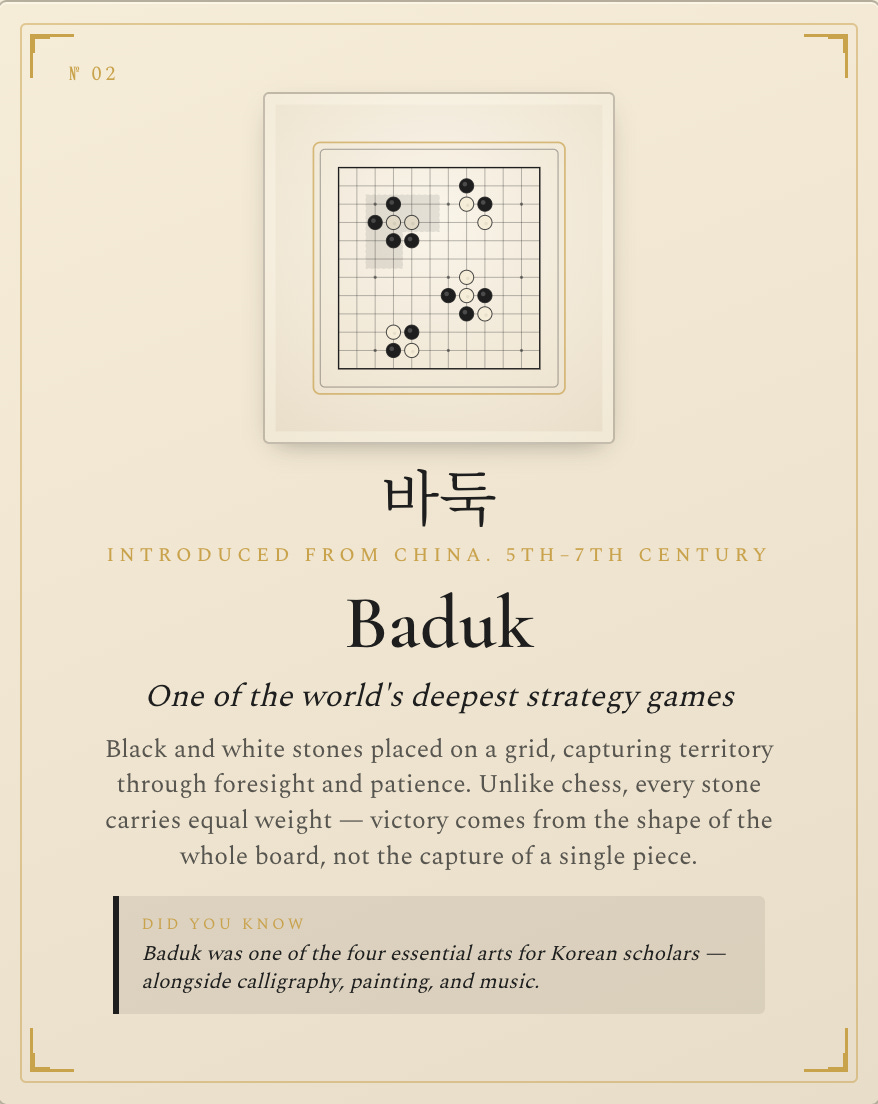
Known internationally as Go, Baduk has been played in Korea for well over a thousand years.
Its rules are remarkably simple: place stones on a grid and control territory. Yet from those simple rules emerges one of the deepest strategy games ever created.
For centuries, Baduk was considered one of the essential arts every educated scholar should master, alongside calligraphy, painting, and music.
A lifetime can be spent learning its secrets.
🎲 Ssangnyuk: Korea’s Backgammon
Long winter evenings needed games.
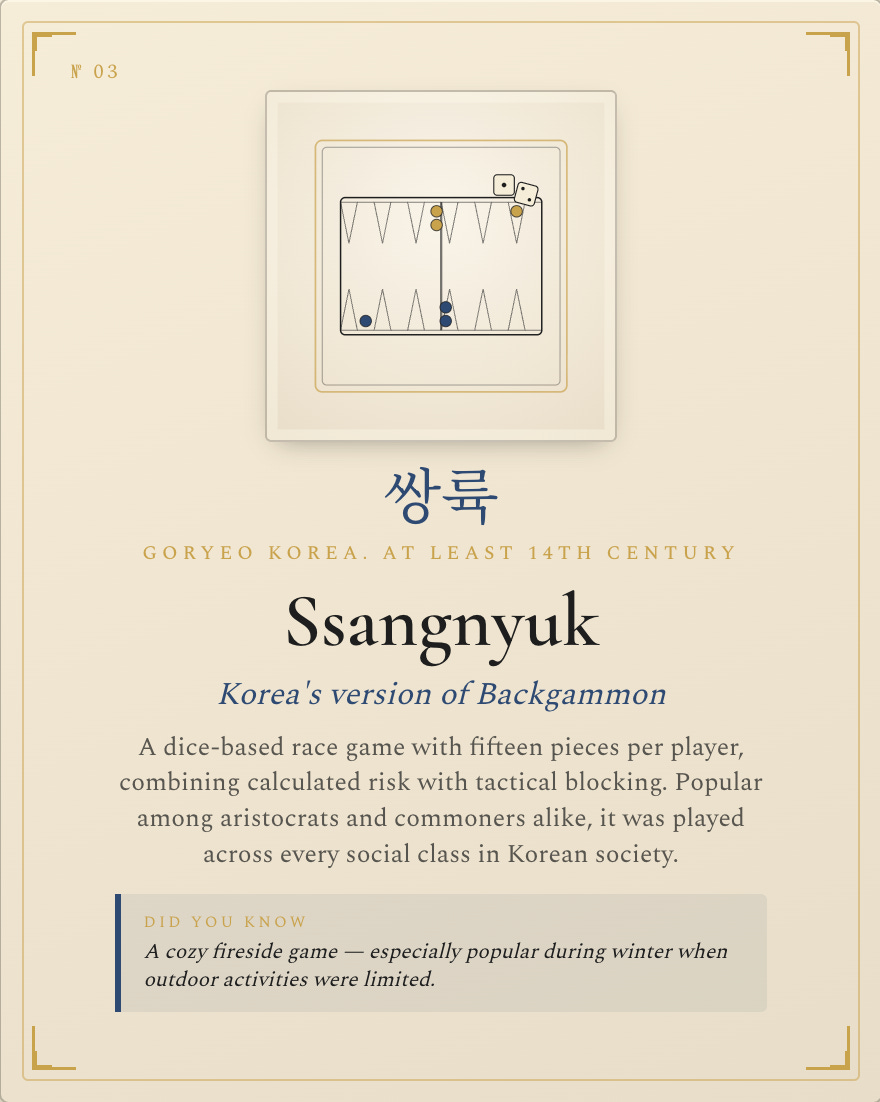
Ssangnyuk filled that role for generations of Koreans.
Often compared to Backgammon, the game combines dice rolls, tactical movement, and calculated risk. Played by both aristocrats and commoners, it became one of Korea’s most widely enjoyed race games.
It was easy to learn, difficult to master, and perfect for gathering around the fire.
🔺 Gonu: Strategy with Almost Nothing
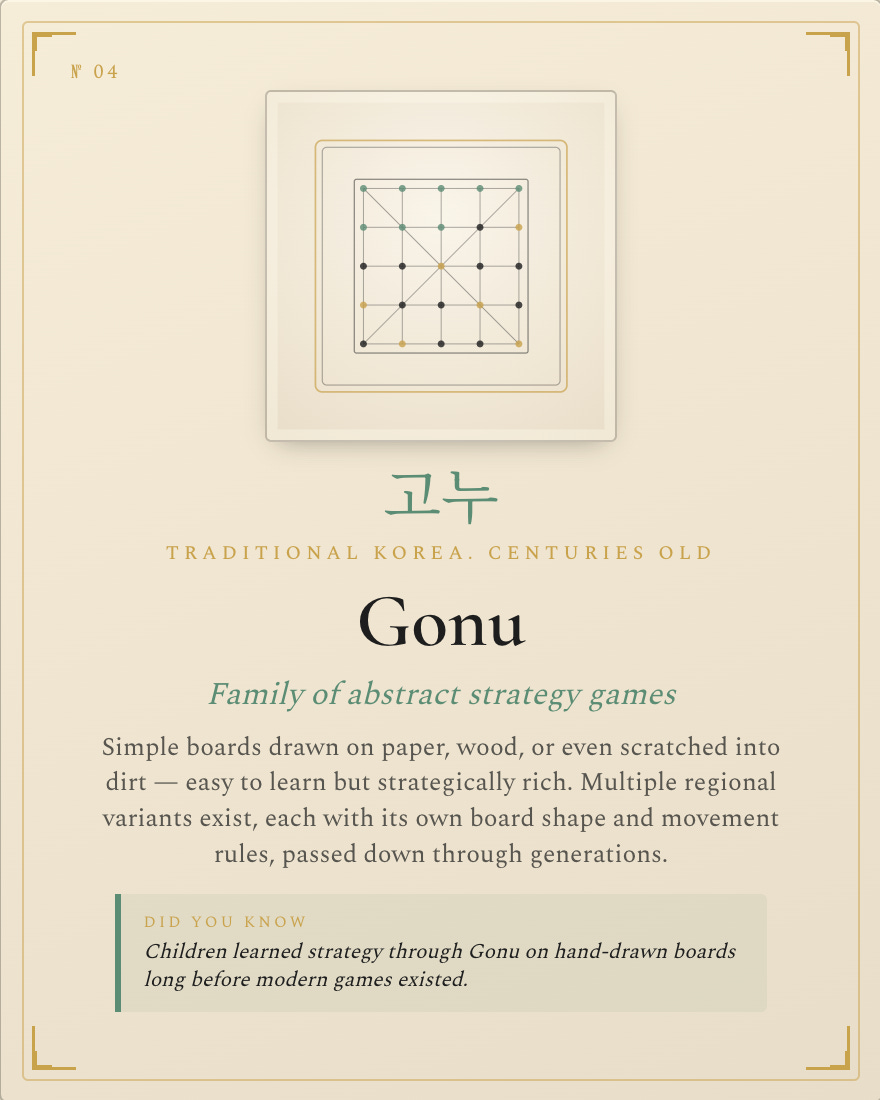
Many traditional games required little more than a board scratched into the dirt.
Gonu was one of them.
Played in many regional variations, Gonu challenges players to trap, block, or outmaneuver their opponent using a handful of pieces. The boards could be drawn on paper, carved into wood, or etched into stone.
Proof that great games don’t need elaborate equipment.
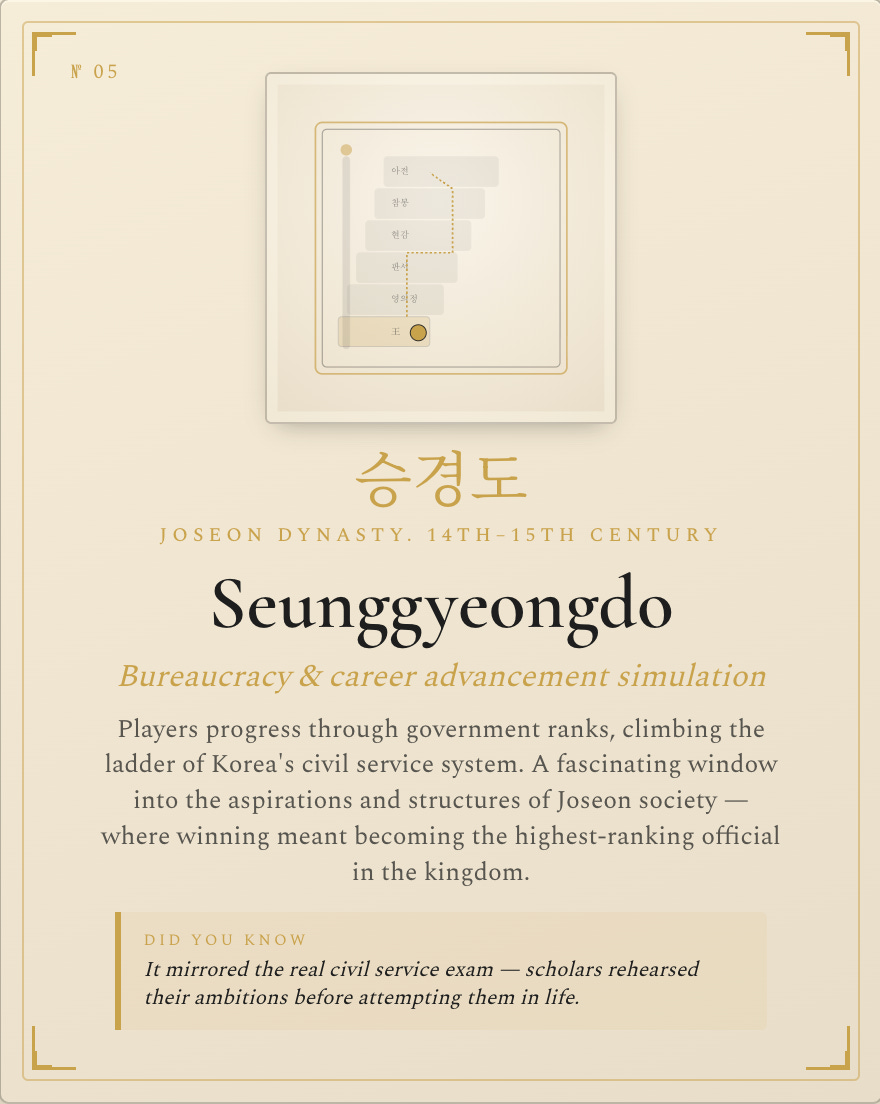
🏛️ Seunggyeongdo: Climbing the Career Ladder
Imagine a board game where the goal isn’t wealth or conquest, but becoming a government official.
That was Seunggyeongdo.
Players progressed through the ranks of Korea’s civil service system, mirroring the ambitions of scholars during the Joseon Dynasty. The game reflected a society where education and government service were among the highest aspirations.
In many ways, it was a playable version of Korean social history.
🪷 Seongbuldo: The Path to Enlightenment
Not every game focused on competition.
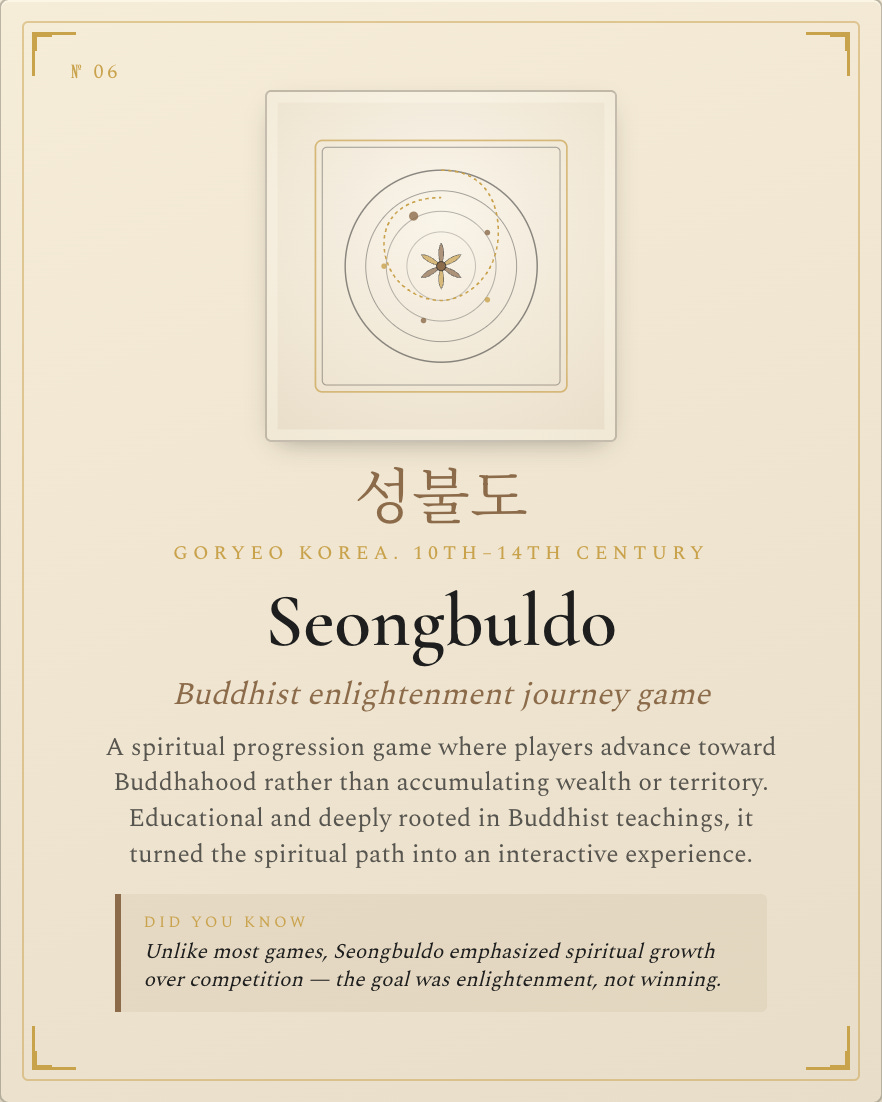
Seongbuldo transformed Buddhist teachings into a board game.
Instead of accumulating money, territory, or power, players advanced through stages of spiritual growth toward enlightenment. It offered a unique way to engage with religious ideas while making them accessible through play.
A reminder that games can teach far more than strategy.
🃏 Tujeon: Korea’s Forgotten Card Craze
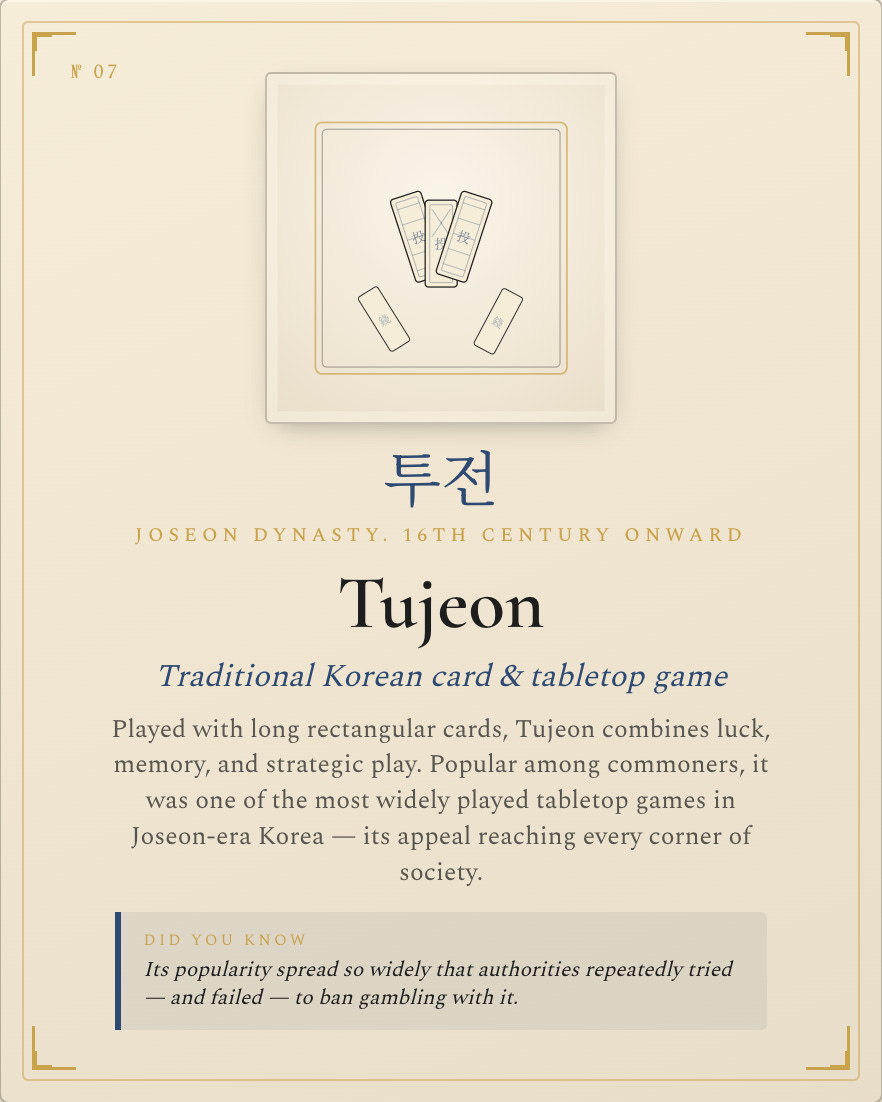
Long before modern playing cards became common, Koreans played Tujeon.
Using long rectangular cards, players combined memory, probability, and strategic decision-making. The game became so popular that authorities repeatedly tried to restrict gambling associated with it.
Despite those efforts, Tujeon remained a favorite across social classes for centuries.
🎯 Jeopo: A Lost Ancestor
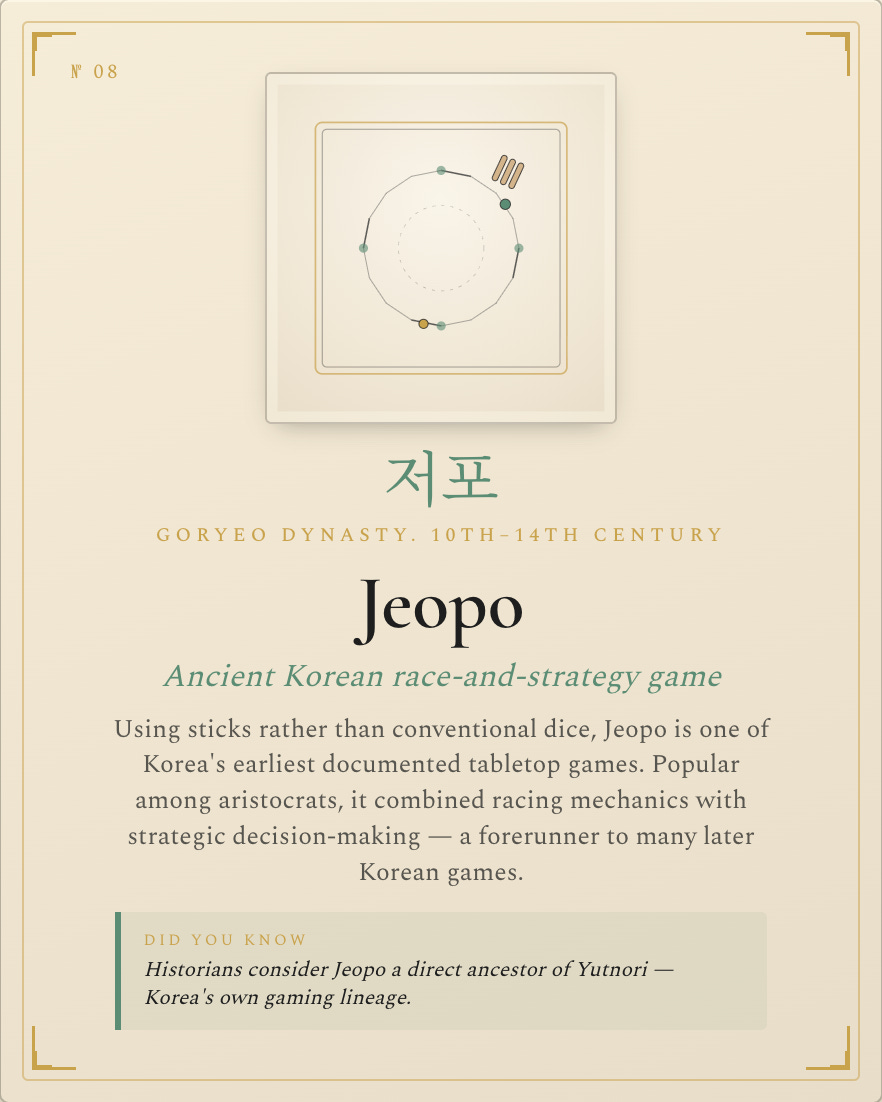
Among Korea’s oldest recorded tabletop games is Jeopo.
Played using sticks rather than conventional dice, Jeopo combined racing mechanics with strategic choices. Historians believe it may have influenced later games, including Yutnori.
While few people play it today, Jeopo offers a glimpse into the foundations of Korea’s gaming tradition.
More Than Just Games
Looking at these games today, it’s easy to see them as relics of the past. But they reveal something deeper about how people spent their free time. They gathered, talked, competed, laughed, and learned together.
Some games taught strategy, others taught morality, and a few taught patience. Yet all of them served a common purpose: creating connection between people.
In a world where entertainment increasingly happens alone and through screens, these forgotten Korean games offer a glimpse into a different way of spending time—one built around community, conversation, and play.
Perhaps that’s why they still feel relevant today. Not because they’re old, but because the human need for play never really changes.
Which of these Korean games would you most like to try?